The Environment Group, a sub-committee of the PCC, has been considering and acting on environmental issues relevant to our church for many years. Outcomes are often implemented by other church groups as, for example, insulating the church hall as part of the hall improvement or installing energy efficient light bulbs as part of routine building maintenance.
The Group considers the big environmental issues facing us today, like Biodiversity Loss as described by Martin Hodson in the first (April 2026) issue of The Messenger. Some of the results are that areas of the church grounds are left ‘wild’ to encourage biodiversity, dangerous trees have been replaced with a wildlife hedge and a nature trail for prayer/wellbeing was cut in the grass next to St John’s Rooms. There is much more we can do for biodiversity as a church and as individuals – see Eco Tip in this and the April edition for ideas – like encouraging insect pollinators and providing suitable habitats.
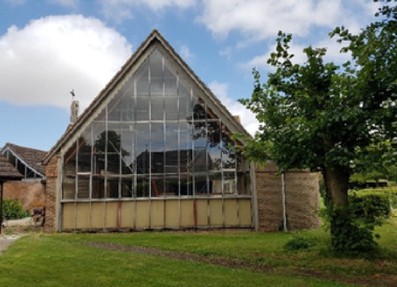
Another big issue the group continues to consider is Climate Change. Our church has taken up the challenge set by the Diocese of Oxford and the Church General Synod, to reach Net Zero carbon across our parish. This recognises the climate emergency and the necessity of a strong, visible Christian response to what is happening to our world. The Church of England aim is to reach Net Zero by 2030; our parish has set a more realistic target of 2035. Again, there are many things we can do as a church, like installing solar panels on the church hall roof, but also actions we can take as members of the church family, such as buying energy efficient appliances when it is time to replace our white goods.

Environmental pollution from various sources involving chemicals from household waste (landfills), industry or agriculture has been well known for a long time, but recently a new pollutant has been identified: Microplastics (plastic pieces under five millimetres long), as described by Thomas Jones in his article for the May edition of The Messenger. Plastic has a role in almost every aspect of our lives, but there is mounting concern about its environmental impact. Discarded plastics contaminate vital ecosystems and can enter the food chains we rely on. As a church, we reduce the use of single-use plastics by refilling bottles for washing up liquid, hand disinfectant and hand soap.
In the April issue, Martin quoted Psalm 24:
‘The Earth is the Lord’s and everything in it’
Scientists try to consider the earth as a whole and have created a framework, ‘Planetary Boundaries’ to assess the rising risks from human pressure on nine critical global processes. Climate Change and the Biosphere are two increasing risks ‘outside the safe boundaries’. However, there is some good news: another process, Stratospheric Ozone Depletion [Ozone high in the atmosphere which protects life on Earth from incoming ultraviolet radiation] is now ‘in the Safe Operating Space’ due to the international phasing-out of ozone-depleting substances, in fridges and elsewhere, since the late 1980s.
The PCC, through the Environment Group, is considering how we can contribute further to positive stories like the above. One possible route is through the church family signing up to the A Rocha UK’s Eco Church programme (https://ecochurch.arocha.org.uk/) – see next issue of The Messenger.
Chris Franklin
This article originally appeared in the St John’s Messenger. If you would like to discuss contributing a future article please contact news@valebenefice.org.uk.